

AI Agents for Customer Support: A Practical Guide
2026-10-08 · Nina Kimes · 4 min read
Learn how AI agents handle customer support, use business knowledge, take approved actions, and hand off to people when needed.
Hand-picked articles, guides, and best practices from the AskHandle team.
2026-10-08 · Nina Kimes · 4 min read
Learn how AI agents handle customer support, use business knowledge, take approved actions, and hand off to people when needed.

2026-09-14 · Emily Henderson · 3 min read
Model Context Protocol (MCP) is most useful when an AI assistant needs to work with real business systems—not just generate text from a chat prompt.

2026-09-14 · Jessy Chan · 5 min read
Customers often start a support conversation before they are signed in. They may ask a general question, then need help with an order, subscription, account setting, or billing issue. In those moments, a chat experience can offer a secure login step and, after authentication, allow the AI assistant to use approved customer information to provide more relevant help.

2026-08-27 · Jessy Chan · 5 min read
Omnichannel communication is a customer engagement approach that connects conversations across every channel a business uses—such as website chat, email, SMS, WhatsApp, social messaging, phone, and in-person support.

2026-08-10 · Jessy Chan · 5 min read
A software ecosystem is a group of software products, services, developers, users, and partners that work around a shared platform or set of tools.

2026-08-09 · Dustin Collins · 6 min read
Coding agents are replacing parts of software development: repetitive implementation, first-pass debugging, test scaffolding, and routine refactors. They are not replacing the human work of deciding what to build, why it matters, what risks are acceptable, and whether the result is truly ready to ship.

2026-08-08 · Aria Singh
Data center location is not, by itself, a guarantee of privacy or security. A well-secured data center can exist in any region, and a poorly managed system can create risk anywhere. However, location matters because it determines which laws may apply to data, whether cross-border transfer rules are triggered, and what assurances a software provider must give customers about storage, access, and subprocessors.

2026-08-07 · Aria Singh · 6 min read
Java, like most widely used programming languages, receives regular updates because the environments where software runs do not stand still. New security threats appear, hardware changes, developer practices improve, and businesses need better ways to build and maintain large systems.
2026-08-06 · Jessy Chan · 5 min read
Popular large language models (LLMs) do not literally require Markdown. They can respond to plain sentences, JSON, XML, code, and many other formats. Still, Markdown often produces more consistent results when a prompt contains several instructions, examples, constraints, and source material.

2026-08-01 · Aria Singh · 6 min read
AI safety is the work of making artificial intelligence systems behave reliably, avoid causing harm, and remain controllable when they are used in the real world.

2026-07-31 · Aria Singh · 8 min read
AI can produce an answer in a fraction of a second. But a fast answer is not necessarily a good one.

2026-07-29 · Dustin Collins · 10 min read
Open source software can be an excellent foundation for a product. It can reduce upfront licensing costs, provide more control over your stack, and make it possible to inspect or modify the underlying code.

2026-07-28 · Aria Singh · 5 min read
For an early-stage startup, the right answer is not referrals versus job boards, LinkedIn, or inbound applications.

2026-07-27 · Nina Kimes · 10 min read
AI coding tools have changed the economics of software delivery. A consultant can now prototype faster, generate boilerplate in minutes, accelerate test creation, and move from an idea to a working demo with far less manual coding.

2026-07-24 · Emily Henderson · 5 min read
A text-based PDF is usually the best format for documents that people need to search, copy, select, or read with assistive technology. But there are situations where converting each PDF page into an image—such as PNG, JPEG, or TIFF—provides meaningful advantages.

2026-07-23 · Jessy Chan
Large LLM providers need substantial accelerator capacity just to serve requests from users. Training a model is an enormous one-time or periodic project, but inference—the process of generating answers for millions of prompts—is a continuous production workload.

2026-07-21 · Jim Shi · 3 min read
AI has developed from a theoretical idea into a practical technology used in search engines, customer service, healthcare, manufacturing, finance, and personal productivity. Its progress has not been a straight line. AI has experienced periods of excitement, disappointment, and renewed investment as researchers, businesses, and governments learned what machines could realistically do.

July 13, 2026 · Annie Hayes · 3 min read
AI has already changed our shopping behavior, often in ways so smooth and familiar that many shoppers barely notice it happening. From product recommendations and search results to chat support, price tracking, personalized offers, virtual try-ons, fraud checks, and automated delivery updates, AI now shapes what we see, what we compare, what we trust, and what we eventually buy.
July 12, 2026 · Elise Taylor · 3 min read
Newer large language models write better code because they have learned from broader training data, stronger feedback loops, improved reasoning methods, better tool use, and more focused evaluation. Older models could often complete simple snippets, explain common syntax, or produce boilerplate, but they struggled with larger tasks, hidden edge cases, dependency choices, and multi-step debugging. Modern models are not just better autocomplete systems; they are more capable programming assistants that can plan, revise, test ideas, and adapt to the style of a project.

July 11, 2026 · Ben Larson · 3 min read
Work life balance is not about creating a perfect split between your job and personal life every single day. Some days will be busy, some weeks will feel heavy, and certain seasons may ask more from you than others. The real goal is to build a way of working and living that helps you stay productive without feeling constantly drained. Better balance comes from clearer priorities, stronger boundaries, healthier routines, and a willingness to make small changes before stress turns into burnout.

July 10, 2026 · Jessy Chan · 3 min read
AI tools often seem more trustworthy when they show extra text about how they reached an answer. For a regular user, that can feel useful: more words may look like more care, more logic, and more honesty. Still, the text generated during an AI’s reasoning process is not always the best thing to read, and it may not give the clarity people expect. In many cases, users are better served by a clear explanation, a short summary of key factors, and a list of limits or assumptions behind the answer.

July 9, 2026 · Lillian Kim · 3 min read
A large language model can help you write a simple chess AI faster, especially if you treat it as a coding partner rather than a magic chess engine. You can ask it to generate code, explain board logic, create evaluation rules, test legal moves, and improve weak parts step by step. The best result comes from combining your own goals with clear prompts, small tasks, and steady testing.
July 8, 2026 · Dustin Collins · 3 min read
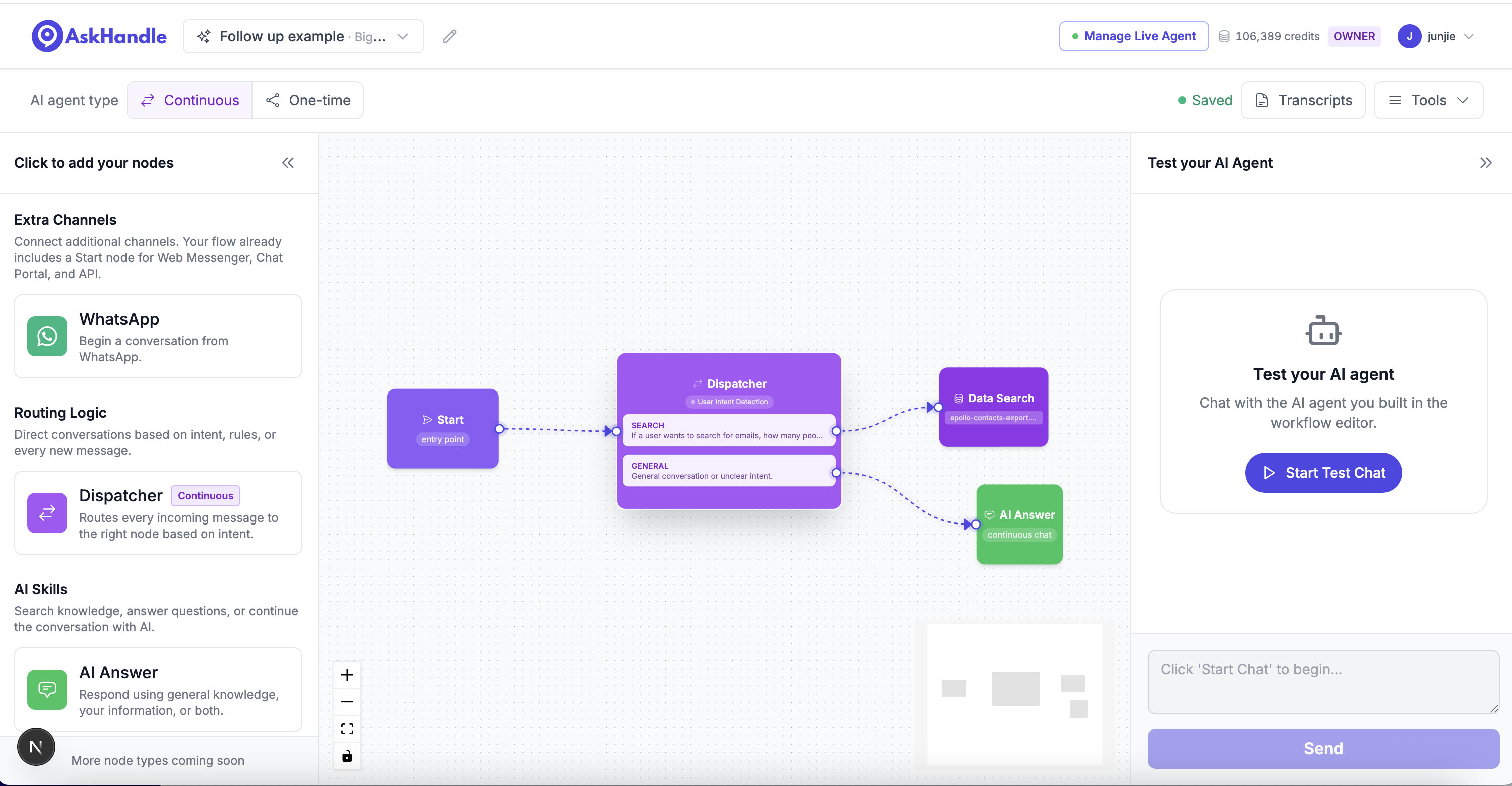
Use the Data Search node's hidden-context feature with a Dispatcher → Data Search → AI Answer flow to let your AI agent answer follow-up questions grounded in previously found data.

July 6, 2026 · Elise Taylor · 3 min read
Claude Sonnet 5 is Anthropic’s newest Sonnet model, and its biggest message is clear: this release is built less like a simple chatbot upgrade and more like a practical work engine for coding, agents, research, business tasks, and long-running projects. It keeps the Sonnet family’s familiar balance of speed, quality, and cost, while pushing harder into multi-step execution, stronger reasoning, larger context, and more reliable tool use.