
AskHandle Blog
How does a GPU work?
- GPU
- Parallel calculation
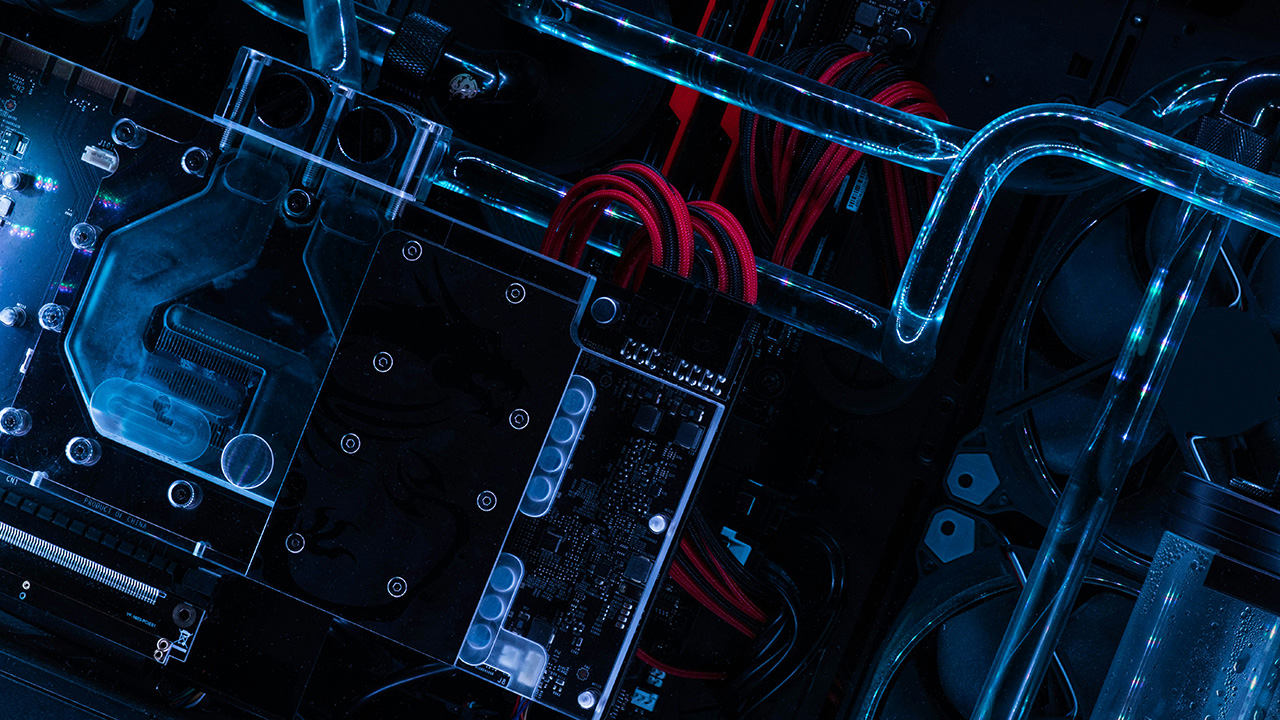
How does a GPU chip work?
Graphics processing units, or GPUs, handle vast amounts of math at the same time. They began as chips for drawing pixels, then grew into engines for scientific computing, machine learning, and simulation. This article explains how a GPU chip works and why it can run so many calculations in parallel.
A brief role of the GPU
A GPU is designed to process streams of data with similar operations. Instead of focusing on one task at a time, it focuses on doing the same task across many data elements. This design matches graphics workloads, where millions of pixels need similar math, and it also fits many non-graphics problems.
Many small cores instead of a few large ones
A central processing unit favors a small number of powerful cores with complex control logic. A GPU takes a different route. It contains thousands of smaller, simpler cores. Each core does less on its own, yet together they deliver high throughput.
These cores are grouped into clusters. Each cluster runs groups of threads in lockstep, meaning they follow the same instruction sequence while working on different data. This approach reduces control overhead and saves chip area, leaving more space for arithmetic units.
The source of massive parallel calculation
Parallelism on a GPU comes from scale and structure. Problems are broken into tiny pieces, often one per data element. Each piece becomes a thread. Tens of thousands of threads may be active at once.
When one group of threads waits for data from memory, another group can run. This rapid switching hides latency without complex prediction logic. The chip stays busy because there is always more work ready to go.
Memory design for throughput
The memory system of a GPU also favors bandwidth over low delay. Large numbers of memory channels feed data to the cores. On-chip caches and shared memory blocks let threads cooperate and reuse data quickly.
Access patterns matter. When threads read nearby memory addresses, the hardware combines requests into wide transactions. This behavior keeps data flowing smoothly and avoids wasted bandwidth.
A different programming model
GPU programming uses a data-parallel model. Developers write kernels, which are functions applied to many data items. The same kernel runs across thousands of threads. Control flow is simple and uniform for best results.
Threads are organized into blocks or groups. Threads in the same block can share data through fast local memory and synchronize at defined points. This structure maps cleanly onto the hardware clusters.
Workloads that fit the design
Tasks with regular computation and limited branching work well on GPUs. Examples include matrix operations, image processing, physics simulation, and neural network training. Each task involves repeating math across large datasets.
Tasks with heavy decision-making or serial steps run better on CPUs. GPUs still handle parts of these tasks, yet the overall speed depends on choosing the right division of labor.
Trade-offs and limits
The GPU design trades flexibility for throughput. Individual threads run slower than CPU threads, and complex control paths can reduce efficiency. Power use can also be high due to the large number of active units.
Despite these limits, the balance favors problems that scale across data. When a task matches the model, the gains are significant.
A GPU chip works by spreading work across many simple cores, supported by high-bandwidth memory and a data-parallel programming style. This structure explains why GPUs offer such a high level of parallel calculation and why they play a major role in modern computing workloads.