
AskHandle Blog
Why AI Is Replacing White-Collar Jobs — Especially Fixed-Task Roles
- White-Collar
- Jobs
- AI
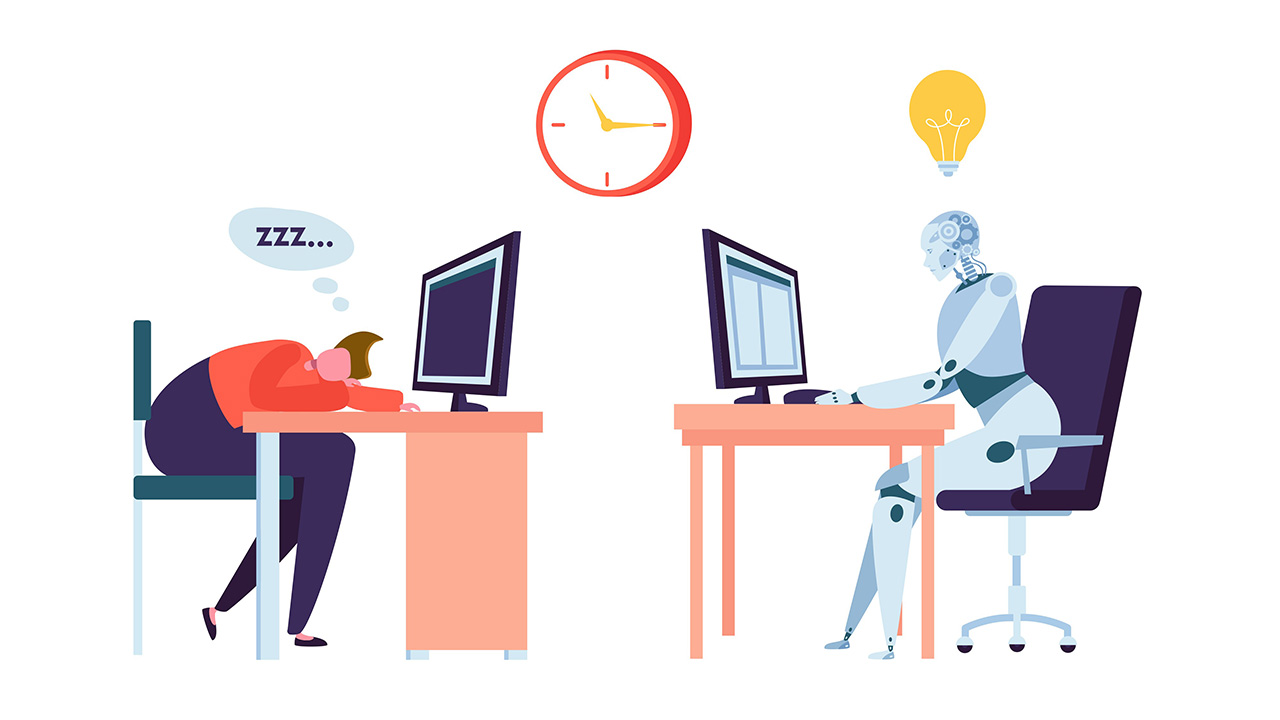
Why AI Is Replacing White-Collar Jobs — Especially Fixed-Task Roles
For decades, automation primarily threatened blue-collar work: factory lines, warehouses, and repetitive physical labor. Today, artificial intelligence is reshaping a different part of the economy. Increasingly, it is white-collar jobs — particularly those built around fixed, repeatable tasks — that are being automated.
This shift is not speculative. It is structural. And it is accelerating.
The Nature of Fixed-Task Work
A large portion of white-collar employment consists of structured, rules-based work:
- Processing invoices
- Reviewing contracts for standard clauses
- Drafting routine reports
- Performing compliance checks
- Conducting preliminary legal research
- Creating templated marketing copy
- Data entry and reconciliation
- Customer support responses
These roles may require education and professional credentials, but at their core they often follow predictable workflows. When a job can be broken down into clear inputs, a defined process, and standardized outputs, it becomes highly susceptible to automation.
AI excels at pattern recognition, rule application, and probabilistic prediction — precisely the mechanics behind many administrative and knowledge-based tasks.
Why AI Is So Effective at Replacing These Roles
1. AI Thrives on Structure
Modern AI systems — particularly large language models and machine learning algorithms — perform exceptionally well when the problem space is constrained. If a task follows consistent logic and relies on historical examples, AI can often replicate or outperform human execution.
For example:
- Financial models trained on historical data can detect anomalies faster than auditors.
- Document analysis systems can review thousands of contracts in minutes.
- Customer service AI can answer routine queries instantly at scale.
The more repetitive the task, the more economically attractive it becomes to automate.
2. Marginal Cost Approaches Zero
Human labor scales linearly: one employee equals one salary. AI scales non-linearly. Once developed and deployed, the cost of processing one document versus ten thousand is minimal.
This changes corporate incentives. Companies no longer need large teams performing standardized tasks when software can perform them continuously, without fatigue, at near-zero incremental cost.
3. Speed and Consistency
Humans make errors, experience fatigue, and vary in output quality. AI systems deliver consistent performance across tasks, 24/7.
For industries like finance, law, insurance, and healthcare administration — where accuracy and documentation are critical — this consistency is powerful. If an AI system can reduce error rates even marginally while increasing speed dramatically, the economic case becomes compelling.
4. Data Advantage
AI improves with exposure to data. White-collar work generates enormous amounts of structured digital information: emails, spreadsheets, reports, policies, contracts, transaction logs.
Unlike physical labor, which depends on complex real-world variability, knowledge work often exists in a digital environment that AI can directly access and learn from.
This makes many white-collar tasks uniquely vulnerable.
The Fixed-Task Vulnerability
The most at-risk jobs share common characteristics:
- Clear rules and procedures
- Limited ambiguity
- High repetition
- Standardized outputs
- Measurable performance criteria
These roles are less about judgment and more about execution.
For example:
- Junior analysts compiling reports
- Paralegals performing routine document review
- Accountants reconciling standard transactions
- HR staff screening resumes
- Insurance underwriters processing routine claims
When the core value of the job is applying predefined logic to structured data, AI can replicate the function.
Why Not All White-Collar Work Is Equally Threatened
Importantly, AI does not replace “intelligence” broadly — it replaces narrow, structured intelligence.
Jobs that require:
- High levels of strategic thinking
- Complex negotiation
- Leadership and influence
- Creative synthesis under ambiguity
- Emotional intelligence
- Cross-domain reasoning
remain far harder to automate.
Executives, senior strategists, entrepreneurs, therapists, and roles that depend heavily on trust, relationships, and nuanced decision-making are more resilient — at least for now.
The dividing line is not blue-collar versus white-collar. It is routine versus adaptive.
Economic Pressure Is the Real Driver
AI adoption is not purely technological — it is economic.
Companies face:
- Pressure to cut costs
- Demand for faster turnaround
- Competitive markets
- Shareholder expectations
If one firm automates routine white-collar work and reduces costs by 30%, competitors must follow or lose margin. This creates an automation cascade.
Even if AI systems are imperfect, they may be “good enough” relative to human labor costs.
What This Means for the Workforce
We are entering a phase where:
- Entry-level white-collar roles shrink
- Middle management layers compress
- Hybrid human-AI roles expand
- Skill requirements shift toward oversight and integration
Workers who focus solely on performing fixed tasks face growing risk. Workers who can design systems, interpret outputs, manage complexity, or combine multiple domains gain leverage.
In many industries, the question is no longer whether AI can assist — it is whether full automation becomes cheaper than assistance.
How to Avoid Being Replaced
If this transformation is inevitable, the question shifts from denial to adaptation.
The goal is not to compete against AI at performing fixed tasks. You will lose that competition.
The goal is to move into work that AI cannot easily replicate — or to position yourself as the orchestrator of AI systems.
Here’s how.
1. Move Up the Value Chain
Tasks are replaceable. Judgment is harder to automate.
Shift from:
- Producing reports → Interpreting reports
- Drafting documents → Structuring complex negotiations
- Processing data → Designing decision frameworks
If your output can be templated, it can be automated. If your output requires navigating ambiguity, tradeoffs, and conflicting incentives, you are safer.
2. Develop Cross-Domain Thinking
AI excels in narrow domains. It struggles when problems require integrating multiple perspectives, industries, or cultural contexts.
Build skills in:
- Strategic synthesis
- Systems thinking
- Business model design
- Ethical decision-making
- Interdisciplinary problem solving
The more your role depends on connecting disparate ideas, the harder it becomes to automate.
3. Master AI — Don’t Compete With It
Workers who understand how to deploy, fine-tune, and supervise AI systems will have leverage.
Learn:
- Prompt engineering and workflow automation
- Data interpretation
- AI system evaluation and oversight
- Process redesign around AI integration
Instead of being replaced by AI, become the person who replaces ten others by managing AI effectively.
4. Strengthen Human Skills AI Cannot Replicate
AI does not build trust. It does not negotiate complex emotional dynamics. It does not lead organizations through uncertainty.
Develop:
- Persuasion and negotiation
- Leadership under ambiguity
- Conflict resolution
- High-stakes communication
- Relationship-building
The more your value depends on trust and influence rather than execution, the more resilient your role becomes.
5. Embrace Creative and Strategic Risk
Automation compresses the middle. The future labor market will increasingly reward either:
- Highly creative, strategic roles
- Highly specialized technical roles
Playing it safe in procedural middle-ground jobs becomes riskier over time.
A Structural Shift, Not a Temporary Trend
The displacement of routine white-collar work is unlikely to reverse. As AI models improve in reasoning, multimodal understanding, and contextual awareness, the boundary of automatable tasks will continue expanding.
History suggests that new categories of work will emerge. However, the transition may be uneven and disruptive, particularly for professionals whose skills were built around standardized execution rather than adaptive thinking.
The long-term economic transformation may resemble previous industrial revolutions — but this time, the assembly line runs through spreadsheets, documents, and knowledge workflows.