
AskHandle Blog
How does fiber optic cable work?
- Fiber
- Cable
- Light
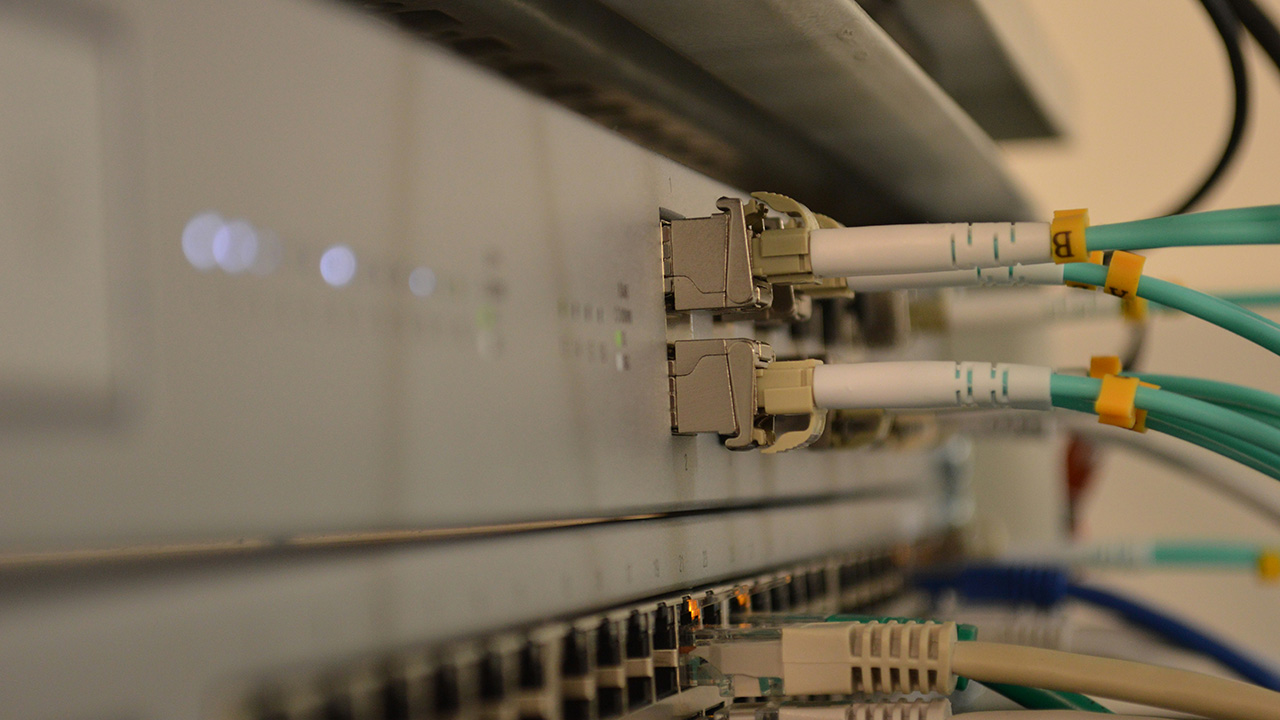
How Does Fiber Optic Cable Work?
Fiber optic cable carries data as light rather than electrical signals. That simple change is why fiber can move enormous amounts of information over long distances with low loss and high reliability. Instead of pushing electrons through metal, fiber guides pulses of light through a thin strand of glass or plastic, keeping the signal clean and stable even across many kilometers.
What a fiber cable is, in simple terms
Inside a fiber optic cable is a hair-thin strand of very pure glass.
It has two main layers:
- The core: the center, where the light travels.
- The cladding: a layer of glass around the core that keeps the light trapped inside.
Around this glass are protective coatings and an outer jacket. These don’t carry data — they just protect the fragile fiber so it can be bent, pulled, and installed without breaking.
Why light doesn’t escape
Light stays inside the fiber because of a physics effect similar to how a mirror works.
The glass in the core and the glass around it are slightly different. When light hits the boundary, it bounces back inward instead of escaping. This happens over and over again, guiding the light down the cable like a hallway with perfectly reflective walls.
So even if the cable bends, the light keeps bouncing forward inside the core instead of leaking out.
How data is turned into light
At the sending end, there is a tiny light source, usually a laser.
Here is what happens:
- Electronics create data (the same 1s and 0s used everywhere in computing).
- The laser turns on and off extremely fast, or slightly changes the light it produces.
- These rapid changes form a pattern of light pulses.
- Those light pulses travel into the fiber.
Each pulse, or change in the light wave, represents bits of data.
So the cable is not carrying a continuous beam. It is carrying a carefully controlled stream of light signals that encode information.
How light is turned back into data
At the receiving end is a light sensor called a photodiode.
It does the reverse process:
- It receives the incoming light.
- It converts light into tiny electrical signals.
- Electronics clean and interpret those signals back into 1s and 0s.
- The device delivers the data to your router, server, or computer.
From the system’s point of view, it looks just like any other data connection — even though light did the traveling in between.
Why light can travel such long distances in fiber
There are three main reasons fiber works so well over long distances.
1. Glass is extremely transparent
The type of glass used in fiber is incredibly pure. At certain wavelengths, light can travel tens of kilometers before it weakens much at all. That means the signal doesn’t need to be boosted very often.
With copper cables, electrical signals lose strength quickly and must be regenerated much more frequently.
2. Light does not pick up electrical noise
Electrical cables act like antennas. They absorb noise from power lines, motors, radios, and storms.
Light inside glass does not care about electromagnetic interference. Nothing from the outside easily disturbs it. This keeps signals clean even over long runs.
3. Light can carry enormous amounts of information
Light waves change extremely fast. That allows engineers to encode data at very high rates.
On top of that, multiple colors of light can be sent down the same fiber at once. Each color carries its own separate data stream. This is like turning one road into a multi-lane highway without laying new cable.
Why fiber can carry so much data
Fiber’s huge capacity comes from combining several advantages:
- Light can change incredibly fast.
- Many colors of light can share the same fiber.
- Signals stay clean and strong over long distances.
This is why a single thin fiber can carry internet traffic for entire cities or countries.
What actually limits fiber
The glass itself is rarely the main limit.
In real networks, limits usually come from:
- The equipment that creates and detects the light
- Signal spreading over very long distances
- Losses at connectors and splices
- Physical bending or damage to the cable
As technology improves, the same fibers are often reused for faster and faster systems.
The simple picture to remember
- Computers turn data into fast changes of light.
- Fiber guides that light through glass without letting it escape.
- Light travels very far with little loss and little noise.
- Receivers turn the light back into electrical data.
Fiber optic cable works because it gives light a protected path to travel — and light is one of the best carriers of information we have.