
AskHandle Blog
Why Is Gold Always Valuable?
- Gold
- Value
- Nuclear physics
Why Is Gold Always Valuable?
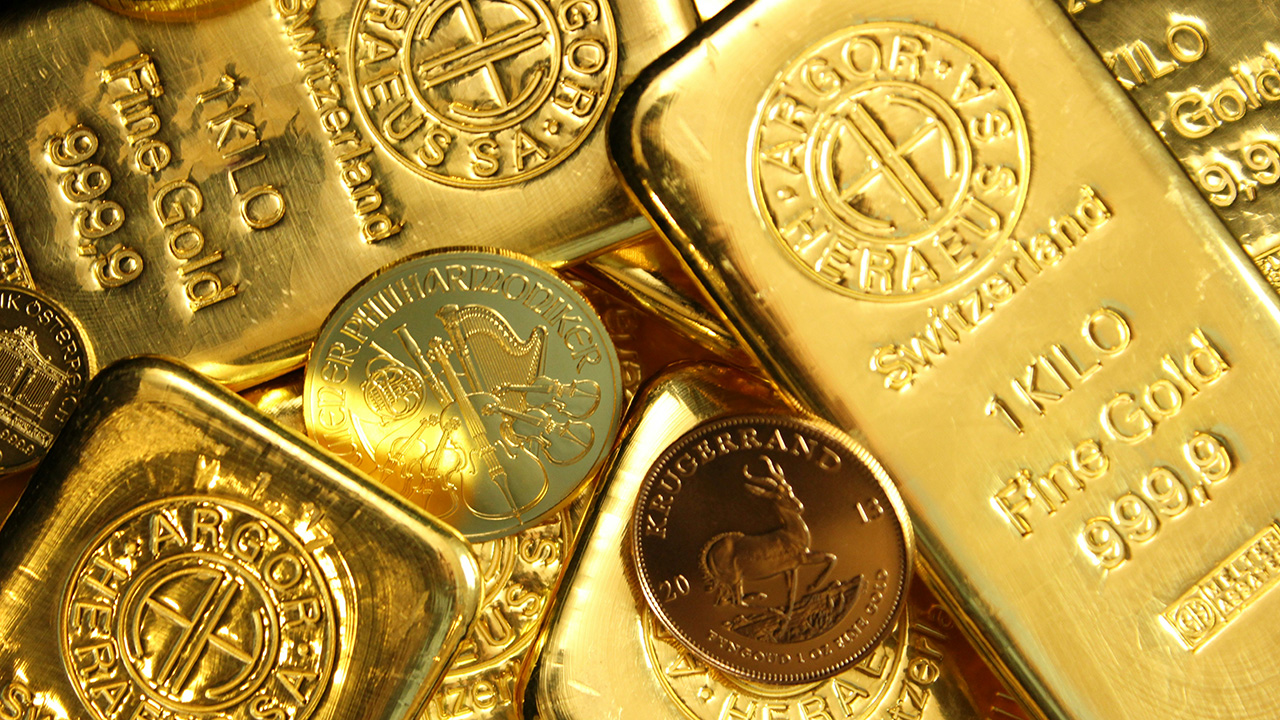
Gold has held human attention for thousands of years. Trends rise and fall, currencies change design, and technologies come and go, yet gold keeps its place as something people want to own. That long-running value is not an accident. It comes from a mix of nature, chemistry, scarcity, and human behavior. It also raises a modern question: if we can make so many things in laboratories, can we make gold too?
Gold’s Value Is Old, but Not Outdated
Gold has been used as jewelry, religious objects, and money across many cultures that never met each other. That matters because it suggests gold’s appeal isn’t tied to one government or one era.
Even when gold is no longer used as everyday currency, it still works as a widely recognized store of value. People may debate how much it should be worth, but few debate whether it is worth something.
Scarcity That You Can’t Quickly Fix
One major reason gold stays valuable is scarcity.
Gold is rare in Earth’s crust, and it is difficult to gather in large amounts. Mining takes years of planning, huge equipment, skilled labor, permits, and energy. New supply grows slowly, and sudden leaps in production are uncommon.
That steady, limited supply gives gold a different character than items that can be manufactured quickly once demand spikes. When demand for smartphones rises, production can ramp up. When demand for gold rises, mining cannot simply double next month.
It Doesn’t Rust, Rot, or Fade
Gold is chemically stable. It resists corrosion and tarnish. Iron rusts. Silver darkens. Many materials break down over time. Gold stays gold.
That durability matters for long-term wealth. A gold coin buried for centuries can come out looking much like it did when it went in. This makes gold practical for storing value across generations.
It’s Easy to Recognize and Test
Gold is also valuable because it can be verified.
For most of history, people could assess gold with simple methods: weight, density, color, malleability, and basic scratch or acid tests. Modern testing is even more precise, but the key point remains: gold is not a mysterious substance that requires advanced tools to identify.
When a material is widely recognized and relatively easy to authenticate, it becomes easier to trade. That supports liquidity, meaning you can usually find someone willing to exchange it for goods, services, or money.
High Value in a Small Package
Gold concentrates a lot of value into a small amount of mass and volume. This is one reason it has served as money and as a portable reserve.
Transporting wealth as bags of grain or stacks of copper takes space and invites spoilage or damage. Gold, in contrast, can represent large value in a small bar or a handful of coins. This “value density” keeps gold attractive for reserves, emergency savings, and international trade.
Divisible Without Losing Much Value
Gold can be divided and still remain gold. You can melt it, recast it, and measure it into many sizes. That helps it function as a tradeable asset.
While cutting a painting in half destroys its value, splitting gold into smaller pieces does not ruin the underlying material. As long as purity and weight are known, smaller units can still be exchanged.
It Has Real Uses Beyond Jewelry
Gold is not valuable only because people like how it looks. It has industrial uses that create baseline demand:
- Electronics: Gold conducts electricity well and resists corrosion, so it is used in connectors and high-reliability components.
- Medicine and dentistry: Certain gold compounds and materials are useful in specialized medical contexts.
- Aerospace: Reliability in harsh environments makes gold useful for coatings and specific parts.
These uses don’t fully explain gold’s price on their own, but they support the idea that gold is not a purely decorative commodity.
Trust and Social Agreement
Gold is also valuable because people collectively agree it is. This point is sometimes treated like an insult, as if “it’s just a belief.” Yet social agreement is how money, laws, and property work.
Gold built trust over long periods because it met the practical needs of trade: scarcity, durability, portability, and easy testing. Once many societies accepted it, that acceptance reinforced itself. A thing that many people already want is easier for the next person to accept.
Gold as a “Financial Refuge”
Gold often rises in popularity when confidence in other assets weakens. During periods of high inflation, political instability, or banking stress, some investors move part of their wealth into gold.
This does not mean gold always goes up in price. It means gold often plays a special role: it is not tied to a company’s profits or a single nation’s policy choices. That psychological and strategic role supports long-term demand.
Can Gold Be Artificially Made?
Yes—gold can be made artificially, but not in the way most people mean when they ask.
Gold is a chemical element (Au). Elements are defined by the number of protons in their nuclei. Gold has 79 protons. If you want to “make gold,” you must change the nucleus of another element so it ends up with 79 protons. That is not chemistry; it is nuclear physics.
Nuclear Transmutation: The Real Method
Artificial production of gold is possible through nuclear reactions, such as:
- Bombarding certain elements with neutrons or other particles in a reactor or particle accelerator
- Using radioactive decay chains where a heavier element transforms into different elements over time
In principle, you can start with something like mercury or platinum and convert some atoms into gold by changing the number of protons through nuclear processes.
Why It Doesn’t Lead to Cheap Gold
Artificial gold does not flood the market for several reasons:
- Extreme cost: Particle accelerators and nuclear reactors are expensive to build and run. The energy and infrastructure required to make tiny amounts of gold costs far more than the gold is worth.
- Low yield: These processes produce very small quantities. You might create microscopic amounts, not tons.
- Isotopes and radioactivity: Some routes can produce gold isotopes that are unstable or come with radioactive byproducts. Even if the gold produced is stable, handling and separation can be difficult and costly.
- Better things to do with the equipment: Facilities capable of transmutation are usually used for research, medical isotopes, materials science, and other high-value purposes.
So while it is scientifically possible, it is not commercially practical as a way to mass-produce market-ready gold.
If Gold Can Be Made, Why Doesn’t That Destroy Its Value?
Because “can be made” is not the same as “can be made cheaply, safely, and at scale.”
Gold’s market value depends on supply and demand. Artificial production is currently so expensive and limited that it does not meaningfully increase supply. Natural mining remains the main source because it is still far cheaper than nuclear manufacturing.
If one day a new method could create large amounts of gold at low cost, gold’s price would likely fall. Yet that would require a breakthrough that changes nuclear economics dramatically, not just a small improvement.
Gold’s Value Is a Mix of Nature and Human Choice
Gold stays valuable because it is scarce, durable, recognizable, divisible, portable, and widely trusted. Those traits helped it become a long-term store of value, and that history continues to shape demand today.
Gold can be made artificially, but only through nuclear processes that are costly and impractical for mass production. For now, nature still controls the supply, and people still treat gold as a dependable form of wealth—one small, heavy, untarnished piece of matter that has kept its status for a very long time.