
AskHandle Blog
What Is a Printed Circuit Board?
- PCB
- Circuit
What Is a Printed Circuit Board?
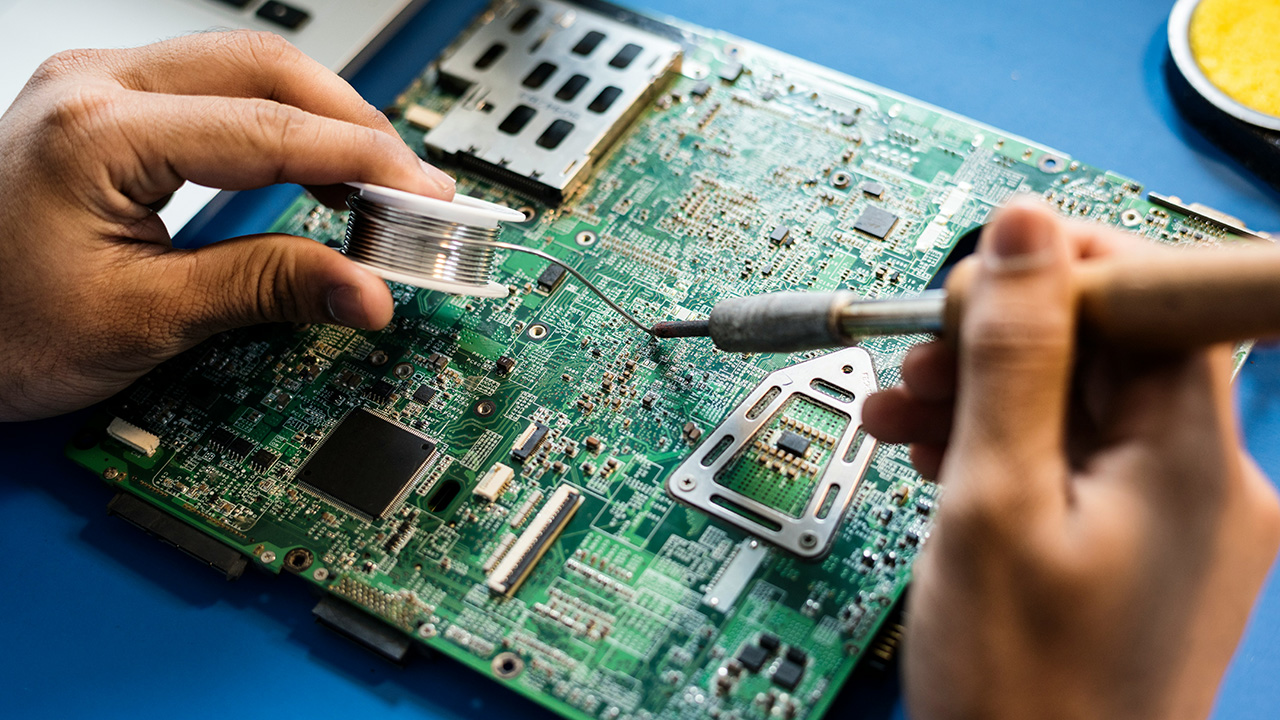
Printed circuit boards (PCBs) are the physical platforms that hold and connect electronic parts. They appear in everyday products like phones, cars, medical devices, appliances, and industrial machines. Without PCBs, most electronics would be bulkier, less reliable, and harder to manufacture consistently.
Definition and basic idea
A printed circuit board is a rigid or flexible board that provides two things at once:
- Mechanical support for components such as resistors, capacitors, connectors, and integrated circuits
- Electrical connections through patterned conductive paths, usually made of copper
Those conductive paths replace many loose wires. Instead of hand-routing connections from part to part, the board contains designed “tracks” that guide current and signals where they need to go.
Main parts of a PCB
PCBs can look simple or highly complex, but most share the same building blocks.
Substrate (the base material)
The substrate is the insulating foundation. A common material is FR-4, a fiberglass-reinforced epoxy laminate. Other materials exist for specialized needs, such as heat resistance, flexibility, or high-frequency performance.
Copper layer
Thin copper sheets are bonded to the substrate. The copper is later shaped into traces, pads, and planes. Thicker copper can carry more current but can also affect manufacturing detail and cost.
Solder mask
The solder mask is the colored coating (often green) that protects copper from corrosion and reduces accidental solder bridges during assembly. It also helps durability in daily handling.
Silkscreen
Silkscreen is the printed text and symbols on the board, used for labels like component outlines, reference designators (R1, C3, U2), pin indicators, and polarity marks.
Vias and plated holes
A via is a small hole that connects copper layers electrically. Vias make multilayer routing possible and allow dense designs. Component leads may go through larger plated holes (through-hole technology).
How PCBs are made (high-level)
PCB fabrication follows a series of controlled steps:
- Design and layout using CAD tools to define copper patterns and layer stack-up
- Imaging and etching to remove unwanted copper and form traces and pads
- Drilling for vias and component holes
- Plating to add conductive copper inside drilled holes
- Applying solder mask and silkscreen for protection and labeling
- Surface finish (such as HASL or ENIG) to improve solderability and prevent oxidation
- Electrical testing to check for opens and shorts before assembly
Types of printed circuit boards
Different products need different board styles.
Single-sided and double-sided boards
- Single-sided PCBs have copper on one side and are used in simple, low-cost electronics.
- Double-sided boards have copper on both sides and use vias to connect them.
Multilayer boards
Multilayer PCBs stack several copper layers separated by insulating material. This supports dense routing, controlled impedance for signals, and dedicated power/ground planes that reduce noise.
Rigid, flexible, and rigid-flex
- Rigid boards keep their shape and suit most applications.
- Flexible boards bend and fit into tight spaces.
- Rigid-flex combines both, reducing connectors and improving reliability in moving or compact assemblies.
Why PCBs matter in real products
PCBs improve electronics in practical ways:
- Repeatable manufacturing: every board is built the same way, supporting mass production
- Compact size: dense traces and multilayers reduce overall product size
- Signal performance: short, controlled routes help high-speed signals behave predictably
- Reliability: fewer manual wires means fewer connection failures
- Serviceability: labeled silkscreens and standardized layouts help diagnostics and repair
PCB design factors that affect performance
A board is not only “wiring”; it influences how a circuit behaves.
- Trace width and spacing affect current capacity and risk of shorts
- Grounding and return paths influence noise and electromagnetic interference
- Thermal design (copper pours, thermal vias, heatsinks) helps manage heat
- Component placement affects signal integrity, airflow, and assembly yield
- Material choice can matter for high temperature or high-frequency circuits
A printed circuit board is the structured foundation that supports and connects electronic components using patterned copper conductors. From simple single-layer boards to complex multilayer assemblies, PCBs make modern electronics smaller, more dependable, and easier to produce.