
AskHandle Blog
How Does an Electric Car Work?
- Electric cars
- Battery
- Motor
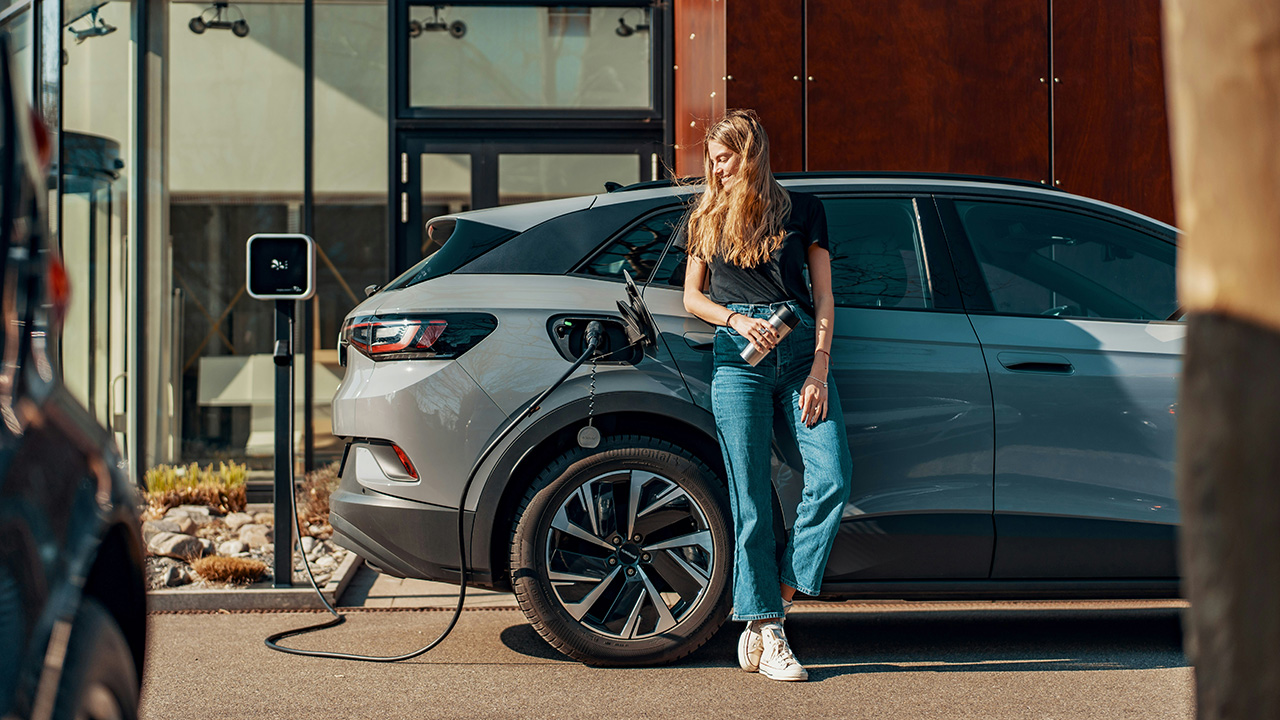
How Does an Electric Car Work?
Electric cars turn electrical energy into motion with fewer moving parts than a gasoline vehicle. Instead of burning fuel to create power, an EV stores electricity in a battery and uses electronics and a motor to drive the wheels. The result is smooth acceleration, quiet operation, and a drivetrain built around energy flow rather than combustion.
The Big Picture: Energy In, Motion Out
An EV works through a chain of steps:
- Electricity is stored in a high-voltage battery pack.
- Power electronics manage the flow of electricity from the battery.
- An electric motor converts electricity into rotation.
- A simple gearbox delivers torque to the wheels.
- Regenerative braking recovers energy during slowing down and sends it back to the battery.
Every major component supports this loop, with software coordinating efficiency, safety, and performance.
The Battery Pack: The Fuel Tank Equivalent
The traction battery is the main energy storage system. Most modern EVs use lithium-ion cells grouped into modules, then assembled into a pack. The pack typically sits low in the floor to improve stability and free up cabin space.
Key features of the battery pack include:
- High voltage output (commonly hundreds of volts) to reduce current for a given power level, improving efficiency.
- Structural protection to handle vibration, impacts, and thermal expansion.
- Sensors and fuses to monitor temperature, voltage, and current and to isolate the pack during a fault.
Battery capacity is measured in kilowatt-hours (kWh). Larger kWh generally means more driving range, though aerodynamics, weight, tire choice, and driving speed also matter.
Battery Management System (BMS): The Guardian of the Pack
A battery works best when each cell stays within safe voltage and temperature limits. The BMS monitors every cell group and controls:
- Cell balancing (keeping cell voltages aligned)
- Charge and discharge limits (to prevent overcharging or deep discharge)
- Thermal safety (reducing power if temperatures rise)
- State of charge estimation (the percentage shown on the dashboard)
Without a BMS, battery life and safety would suffer quickly.
Power Electronics: The Traffic Control for Electricity
EVs rely on multiple electronic units to shape electricity into the form each component needs:
- Inverter: Converts the battery’s DC power into AC power for the motor, while also controlling motor speed and torque. Pressing the accelerator mainly requests torque; the inverter delivers it precisely.
- DC-DC converter: Steps high-voltage DC down to 12V (or sometimes 48V) to run lights, wipers, infotainment, and to charge the low-voltage battery.
- Onboard charger (OBC): Converts AC from a home or public AC charger into DC suitable for charging the traction battery.
For DC fast charging, much of the conversion happens in the charging station, so the car can accept DC directly into the battery through dedicated charging hardware.
The Electric Motor: Instant Torque, Fewer Parts
The motor turns electrical energy into mechanical rotation. Common motor types include permanent magnet and induction designs. What drivers notice is the behavior: strong torque from low speed, smooth power delivery, and precise control.
Many EVs use one motor per axle, and some use a motor for each wheel pair or even each wheel. Multiple motors can provide electric all-wheel drive and allow fine traction control without complex mechanical linkages.
Transmission and Differential: Simpler Than Gas Cars
Most EVs use a single-speed reduction gear. Electric motors can spin very fast across a wide range, so multi-gear transmissions are often unnecessary. A differential (or equivalent gearing arrangement) distributes torque to the wheels on an axle.
Fewer gears and clutches reduce maintenance needs and mechanical losses.
Regenerative Braking: Turning Slowdowns Into Energy
When the driver lifts off the accelerator or presses the brake, the motor can act as a generator. That converts some of the vehicle’s kinetic energy back into electricity and returns it to the battery. Regeneration improves efficiency, especially in stop-and-go driving, and can reduce brake wear. Traditional friction brakes still exist for hard stops and low-speed finishing.
Thermal Management: Keeping Batteries and Motors Happy
Heat affects battery performance and lifespan. EVs use liquid cooling or refrigerant-based systems to manage battery, motor, and electronics temperatures. In cold weather, heating systems warm the battery for better charging and output. Many EVs also use heat pumps to improve cabin heating efficiency.
Supporting Systems: Charging Port, Safety, and Software
Other key EV parts include the charging port, high-voltage contactors (heavy-duty switches that connect/disconnect the battery), crash sensors, insulation monitoring, and control software. Software coordinates traction control, energy use, battery conditioning, and charging speed.
The main building blocks are the battery pack, BMS, inverter and power electronics, electric motor, reduction gear/differential, regenerative braking system, and thermal management. Together, they form a clean, efficient loop that converts stored electricity into motion—and captures some of it back again when slowing down.