
AskHandle Blog
Can AI Calculate Calculus?
- Calculus
- Maths
- AI
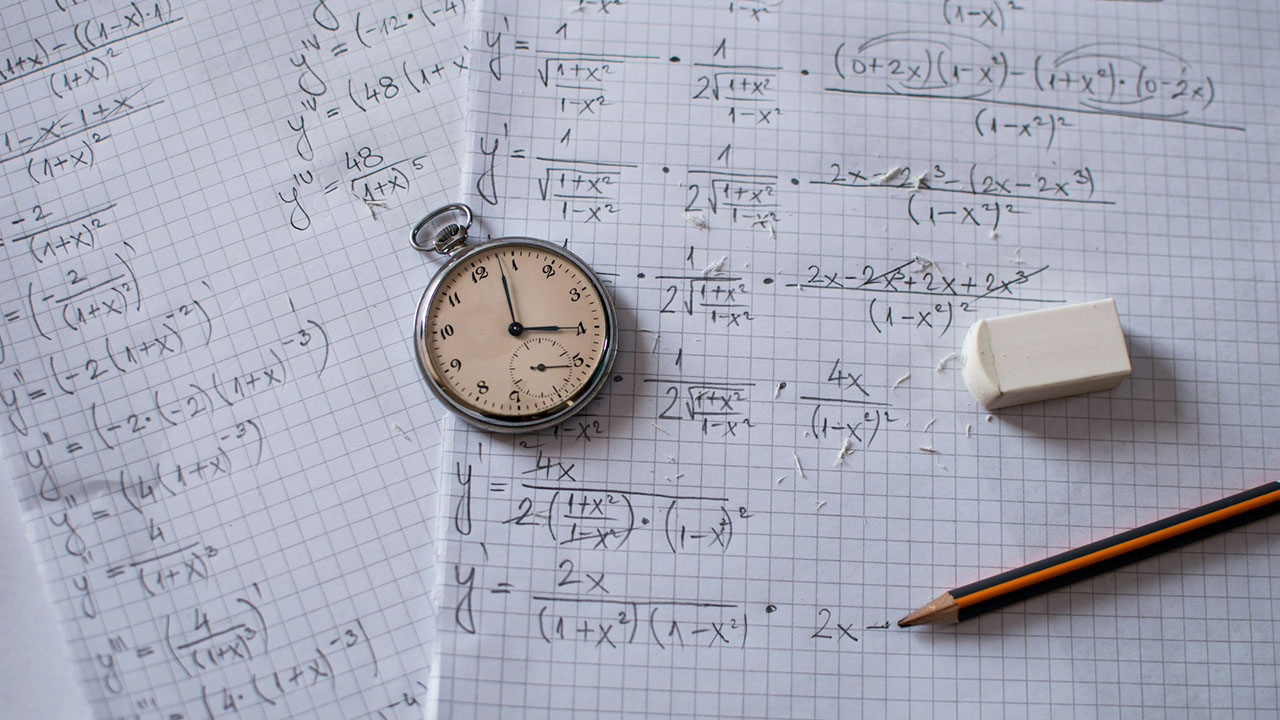
Can AI Calculate Calculus?
Artificial intelligence can calculate calculus, explain many steps, check answers, generate graphs, and help students practice problems, but its accuracy depends on the tool, the prompt, and the difficulty of the task. Calculus involves limits, derivatives, integrals, series, optimization, and differential equations, and AI systems can handle many of these topics with impressive speed. Still, AI is not a perfect math authority. It can make algebra mistakes, skip key reasoning, or give a confident answer that is wrong. Used well, AI can be a powerful study partner for calculus, but it works best when paired with human judgment and careful checking.
What Does It Mean for AI to Calculate Calculus?
When people ask whether AI can calculate calculus, they usually mean one of several things. They may want AI to find a derivative, solve an integral, evaluate a limit, graph a function, explain a theorem, or solve an applied problem involving rates of change.
AI can often do these tasks in seconds. For example, if you ask it to differentiate:
1f(x) = x^3 sin(x)It can apply the product rule and produce:
1f'(x) = 3x^2 sin(x) + x^3 cos(x)It can also explain why the product rule is needed. That makes AI useful not only for getting an answer, but also for learning the method behind the answer.
For integrals, AI can often recognize patterns, apply substitution, use integration by parts, or simplify expressions. If you ask it to solve:
1∫ 2x cos(x^2) dxIt may identify the substitution:
1u = x^2
2du = 2x dx
Then it can give:
1∫ cos(u) du = sin(u) + CSo the final answer is:
1sin(x^2) + CThis type of step-by-step support is one of AI’s strongest uses in calculus.
AI and Derivatives
Derivatives are one of the areas where AI tends to perform well. Many derivative problems follow clear rules, such as the power rule, chain rule, product rule, and quotient rule. Since these rules are structured, AI can usually apply them correctly.
For example, for:
1y = e^(3x^2 + 1)AI can use the chain rule:
1y' = e^(3x^2 + 1) · 6xThis is a straightforward task for many AI systems.
AI can also help explain what a derivative means. It can describe it as a rate of change, the slope of a tangent line, or a way to measure how one quantity changes as another quantity changes. This makes AI helpful for students who are not just trying to finish homework, but also trying to learn the concept.
Still, derivatives can become tricky when notation is unclear, functions are piecewise, or variables are not defined well. A vague prompt can lead to a vague or wrong answer.
AI and Integrals
Integrals are more challenging than derivatives. While many derivative rules can be applied in a direct way, integration often requires choosing the right technique. There may be several possible methods, and some integrals do not have elementary closed-form solutions.
AI can solve many common integral problems, including:
- Basic antiderivatives
- Definite integrals
- Substitution problems
- Integration by parts
- Partial fractions
- Trigonometric integrals
- Some improper integrals
For example, AI can usually solve:
1∫ x e^x dxIt can apply integration by parts and give:
1x e^x - e^x + Cor:
1e^x(x - 1) + CBoth forms are correct.
The risk comes when an integral is complex. AI may choose a method that does not work, make a simplification error, or return a result that looks polished but fails when differentiated. A good habit is to check an antiderivative by taking its derivative. If the derivative returns the original integrand, the answer is likely correct.
AI and Limits
Limits are another major part of calculus. AI can solve many limit problems using factoring, rationalizing, substitution, L’Hôpital’s rule, series expansion, or algebraic simplification.
For example:
1lim x→0 sin(x)/xAI should know the result is:
11It can also explain why this limit matters in calculus, especially in the development of derivative rules for trigonometric functions.
More complicated limits require care. If a problem has a one-sided limit, a discontinuity, or an expression that behaves differently from the left and right, AI may miss the fine details unless the prompt is precise.
A better prompt would be:
1Find the left-hand and right-hand limits of f(x) = |x|/x as x approaches 0, and explain whether the two-sided limit exists.This gives AI a clearer task and reduces the chance of a careless answer.
AI and Differential Equations
AI can also solve some differential equations, especially standard ones taught in introductory courses. These include separable equations, first-order linear equations, and certain second-order equations with constant coefficients.
For example:
1dy/dx = 3yAI can solve this as:
1y = Ce^(3x)It can also handle initial conditions. If:
1y(0) = 5Then:
15 = Ce^0
2C = 5
So:
1y = 5e^(3x)More advanced differential equations can be harder. Some require numerical methods, special functions, or careful interpretation of physical conditions. AI may still help with setup and explanation, but the final answer should be checked with software, a textbook method, or a qualified instructor when accuracy matters.
Can AI Show the Steps?
Yes, and this is one of its best features. AI can show intermediate steps in a way that feels more conversational than a calculator. It can explain why a rule applies, point out common mistakes, and rewrite the solution in simpler language.
For students, this can be very helpful. A standard calculator might give the answer, while AI can explain the path to that answer.
For example, instead of only saying:
1d/dx [ln(x^2 + 1)] = 2x/(x^2 + 1)AI can explain:
- The outside function is
ln(u) - The derivative of
ln(u)isu'/u - The inside function is
x^2 + 1 - The derivative of the inside is
2x - So the result is
2x/(x^2 + 1)
This step-based style supports learning much better than copying a final answer.
Where AI Can Go Wrong
AI can calculate calculus, but it can also make mistakes. Common problems include:
- Incorrect algebra
- Missing constants of integration
- Using the wrong rule
- Skipping domain restrictions
- Misreading notation
- Giving a numerical answer when an exact answer is needed
- Treating an approximation as exact
- Producing steps that sound correct but are not valid
One common issue is the constant of integration. For indefinite integrals, the answer should include + C. AI sometimes forgets this if the prompt is informal.
Another issue is simplification. Two answers may look different but both may be correct. On the other hand, an answer may look elegant and still be wrong. Verification matters.
How to Get Better Calculus Answers from AI
Clear prompts lead to better results. Instead of asking:
1Solve this.Ask:
1Find the derivative of f(x) = x^2 e^x using the product rule. Show each step and simplify the final answer.For integrals, you can ask:
1Evaluate the integral using substitution and explain the choice of u.For limits, try:
1Find the limit as x approaches 0 from both sides and state whether the two-sided limit exists.You can also ask AI to check its own work:
1Differentiate your final answer to verify the integral.This does not guarantee perfection, but it often catches simple errors.
Is AI Better Than a Calculator for Calculus?
AI and calculators serve different roles. A symbolic calculator is usually better for exact computation because it is built specifically for math. AI is often better for explanation, tutoring, and flexible conversation.
A calculator may give a result quickly. AI can explain why the result makes sense. The best approach is often to use both: AI for learning and reasoning, and a reliable math tool for verification.
For students, AI should not replace practice. Calculus skill grows through solving problems, making mistakes, correcting them, and seeing patterns. AI can guide that process, but it should not do all the thinking.
AI can calculate calculus, and it can be very useful for derivatives, integrals, limits, graph analysis, and differential equations. It can explain steps, create practice problems, check work, and help connect formulas to real meaning.
The key is to treat AI as a smart assistant, not an unquestionable answer machine. It can speed up learning, but it still needs clear prompts and careful review. If you use AI to study calculus, ask for steps, request verification, and compare answers when the problem is important.
Calculus is not only about getting the final number or formula. It is about learning how change works, how quantities relate, and how mathematical reasoning builds from one step to the next. AI can help with that process, as long as you stay active in the work.